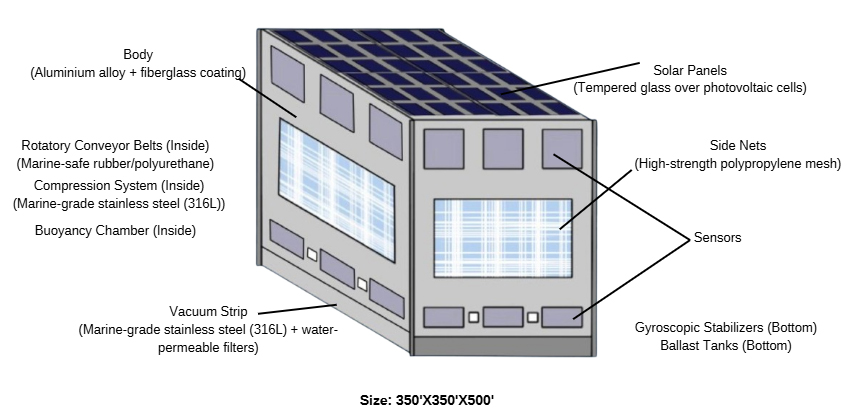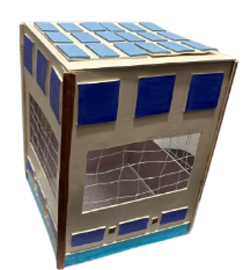
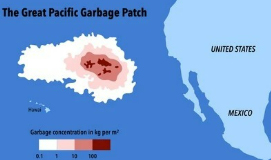
The Great Pacific Garbage Patch (GPGP), a 1.6 million square kilometer soup of microplastics in the North Pacific Ocean, lies between 135°W and 155°D, and 35°N and 42°W, formed by the North Pacific Gyre and where plastics have accumulated due to poor global waste management.
GPGP has negative impacts on ecosystems as microplastics introduce toxins into the food chain, marine organisms ingest plastic, and invasive species destroy their habitats. Efforts to address the problem include ocean clean-up projects, satellite monitoring, waste management reforms, and plastic reduction. But logistical challenges and the need for global cooperation remain.
Solution Statement : The device is an innovative, compact ocean cleanup system designed to combat the Great Pacific Garbage Patch (GPGP). Powered by solar energy, it combines advanced technology to efficiently collect, compress and process marine debris. The system combines real-time data sensors, conveyor belts for waste collection and compaction, and a sustainable solar power framework to minimise environmental impact
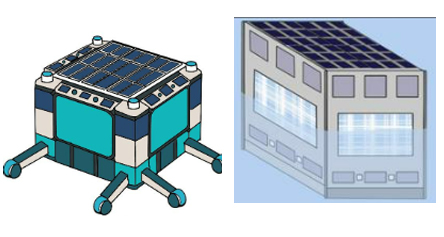
Garbage iscompressed after side nets direct waste and the vacuum draws in debris. The garbage is compacted by hydraulic presses, and data is gathered by real-time sensors. Ballast and stabilizers keep AquaCrux upright and operational, while solar power guarantees continuous, sustainable operation