

Authors:
Ms. Nikkhath Nazeem Niaz
Final Year Student, Department of Interior Design, Atlas University, Mumbai, India
Email: nikkhathnniaz@gmail.com
Mrs. Divya Vijaychandran
Department of Interior Design, Atlas Skilltech University, Mumbai, India
Email: divya.vijaychandran@atlasuniversity.edu.in
Traditional rehabilitation models often overlook the social, emotional, and mental aspects crucial for sustained recovery. This study evaluates these gaps, emphasizing the importance of holistic approaches, including nature-based therapies and emotional support. A mixed-methods approach highlights shortcomings like inadequate societal reintegration resources and underutilized alternative therapies. The findings advocate for customized care plans, enhanced family and community engagement, and nature-based therapies to foster long-term healing and societal reintegration.

Rehabilitation programs play a pivotal role in addressing addiction and mental health challenges. However, current models prioritize rapid medical solutions, often neglecting long-term social and emotional support. These limitations lead to high relapse rates and difficulties in societal reintegration. This study aims to address these gaps by exploring holistic approaches that integrate physical, emotional, and social well-being. It examines alternative therapies, such as mindfulness and nature-based interventions, and underscores the role of family and community support in achieving sustainable recovery.
The literature highlights various approaches to rehabilitation: Winkelman (2001): Altered states of consciousness improve addiction outcomes. Bonham-Corcoran et al. (2022): Nature-based therapies enhance mental health and social bonds. Grandisson et al. (2013): Community-based rehabilitation benefits from stakeholder engagement. Tsoutsoulis et al. (2018): Personalized inpatient care reduces psychiatric relapses. These findings validate the need for holistic, personalized, and community-integrated rehabilitation models.
This study employs surveys targeting individuals aged 18-64 in rehabilitation programs and practitioners. Data collection focuses on readiness for reintegration, emotional support, alternative therapies, and family involvement. A mixed-methods approach provides qualitative and quantitative insights into current gaps and barriers in rehabilitation.
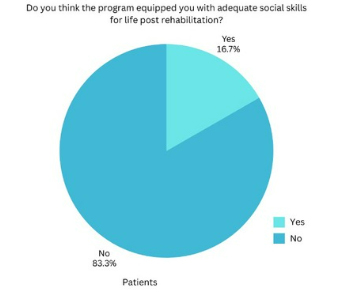
Emotional Support: Insufficient focus on mental health needs; personalized care is crucial.
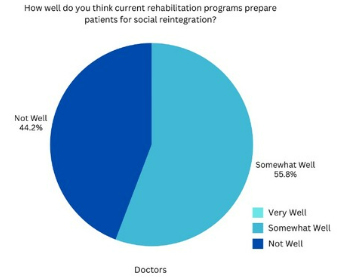
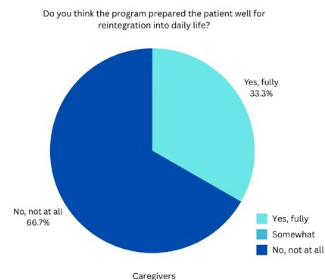
Reintegration Readiness: 50% feel unprepared for societal reintegration.
Relapse Prevention: Cognitive-behavioral and mindfulness therapies are underutilized.
Family and Community: Limited resources for caregivers hinder recovery.
Systemic Barriers: Financial constraints and lack of community involvement impede progress.
Effective Interventions: Programs integrating family and community support report higher success rates.
These findings underscore the necessity of holistic rehabilitation strategies.
This study highlights critical gaps in traditional rehabilitation models, advocating for holistic solutions. Recommendations include:
Expanding access to alternative therapies like mindfulness and nature-based practices.
Strengthening caregiver support with training and resources.
Regularly monitoring progress through structured sessions.
Enhancing affordability via government funding and community sponsorships. By addressing these areas, rehabilitation programs can achieve sustainable recovery and societal reintegration.
Winkelman, M. (2001). Alternative and Traditional Medicine Approaches.
Bonham-Corcoran et al. (2022). Nature-Based Therapy Benefits.
Grandisson et al. (2013). Community-Based Rehabilitation Evaluations.
Tsoutsoulis et al. (2018). Inpatient Mental Health Impact.
Wakida et al. (2018). Mental Health Integration Barriers.